Ink Economy in Draw Your Cart
Treat every stroke like currency — rider, wheels, weapon, then optional armor.
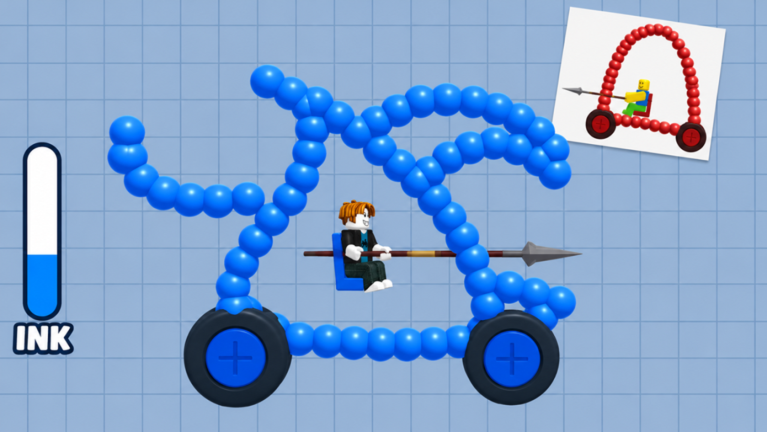
Ink is the real currency of Draw Your Cart. Coins buy UPGRADES that raise the ink bar, but every fight is still decided by how you spend the bar you have right now. Players who outline giant shells first run dry before the weapon exists. Players who save a thin spike and forget wheels flip into the water on contact.
This page is the budget playbook. Pair it with How to Draw for shapes and Upgrades for shop order.
The mandatory three spends
Before decoration, every cart must fund:
- Rider mount — enough frame that the character does not tear free on first bump.
- Wheels — ground contact that rolls instead of scrapes or spins out.
- Weapon — reach that can hit an enemy rider or crack a joint.
If the bar empties after step two, delete a decorative loop and finish the weapon. A connected boring cart beats an art piece that dissolves in FIGHT.
Stroke order that saves ink
- Sketch a short chassis under the rider before any outer armor.
- Place wheel loops that touch the ground line; thicken the axle joint once, not five times.
- Spend leftover ink on a forward spike, blade, or bumper with a clear hit path.
- Only then add thin rings or braces if anything remains.
Fat outlines look strong in the lobby and die in the arena. Thin, continuous lines that share joints survive better and cost less.
Coins → ink upgrades → redraw
Winning fights pays coins. The highest-value early purchase is more ink capacity. After each upgrade:
- Do not keep the old sketch hoping it “scales.”
- Redraw rider, wheels, weapon with the new budget.
- Confirm connections before you invent new flourishes.
Banking for a boss is smart; sitting on coins while your bar is still tiny is not. See Upgrades for the full priority ladder and Boss Fights for when to hold a purchase until the tenth win.
Mode-based budgets
| Mode | Ink priority |
|---|---|
| Public fights | Balanced frame + reliable weapon |
| Boss (every 10 wins) | Extra joint thickness + spare ink after the draw |
| DUEL | Readable counter weapon; less wasted body mass |
| Quest grind | Build that matches the objective (water KO, piece break, etc.) |
Open Duels and Quests and Career when the mode changes mid-session.
Common ink leaks
- Double-tracing the same outline “for strength” without connecting to wheels
- Giant rear wings that never touch a joint
- Multiple disconnected spikes that each cost a full stroke
- Cosmetic wheel skins mistaken for mechanical contact — cosmetics live on Skins, not the ink bar logic
If CAREER shows lots of fights and few wins, ink waste is a prime suspect.
Tools and honesty checks
Use the Tools hub for planning checklists. Ignore “unlimited ink” scripts — those belong in the danger zone covered by Scripts. Real progression is coins → upgrades → cleaner draws.
Practice drill (ten minutes)
- Draw the mandatory three with half your usual ink target.
- Fight once; note what broke first.
- Redraw only the failed joint thicker.
- Repeat until the cart survives two fights without a floating wheel.
Then raise the ink budget through upgrades and repeat the drill at the new ceiling.
Related reading
- Getting Started — day-one loop
- How to Draw — shapes and connections
- Tier List · Cart Builds — example budgets
- Codes — if a promo ever grants coins, spend them on ink first
Master the bar and every other guide on this wiki gets easier.
Frequently Asked Questions
Quick answers for Draw Your Cart players.
What should I draw first with limited ink?
Rider mount, wheels, then weapon. Decoration only if ink remains.
Should I buy skins or ink upgrades first?
Ink upgrades. Skins are cosmetic; the ink bar decides whether your cart stays together.
Why redraw after every upgrade?
Extra ink tempts random loops. A fresh rider–wheels–weapon pass uses the new budget cleanly.
How does ink change for bosses?
Keep spare capacity after the draw so collisions do not erase your only weapon joint. Prep on the Boss Fights page.
Can scripts give unlimited ink?
Do not trust them. They risk your account and are covered on the Scripts hub.